
Before your CRM
How Operelio cleans your leads and gets them into your CRM.
Your leads come from data providers, web forms, events and partners, each with its own column names, duplicates and dead addresses. Operelio sits in between. It cleans each file, verifies the emails, matches each column to a field in your CRM, then pushes the leads into HubSpot, Salesforce or Pipedrive. The steps are below, in order.
What happens to a file
You approve. Operelio does the work.
Upload a file and you see what would change before anything runs. Approve it and the tools run in order: cleaning, verifying emails, removing duplicates and matching your columns to your CRM. Nothing lands in your CRM until you press push.
How it works
See what you have, pick how it runs and push it to your CRM
First, take stock of the data you already get. Then choose how much gets done for you: a trail that runs on its own, Bridgeant planning the job or one tool at a time. When a file is ready, push it straight into your CRM.
Start here
See what you're working with
Before you automate anything, look at the leads you get today and where they need to end up. This matters most when they come from many places.
Map where your leads come from
List every source, like data providers, web forms, events and partners. Note how each one arrives, how often, roughly how many rows and who looks after it. This shows which sources belong together and how often each one needs to run.
 Apollo exportsDownloaded weekly · Wei Chen10,400
 Web formExported daily · Karen Wilson1,800
 Webinar sign-upsExported after each event · Sarah Pentland600
 Partner referralsEmailed monthly · David Garcia150
Check the quality of each one
Pick the fields you can't do without, like email, company and country. Then take a recent file from each source and look for gaps, duplicates and mixed formats. Also note how many people you already get from another source and how many fit who you sell to.
Know what your CRM expects
Look at what's already in your CRM, which fields it requires and which values its dropdown fields accept. Then decide whether new leads come in as contacts, leads or companies, how you'll spot one you already have and who owns them.
 What your CRM expects
Get these ready
You'll need a recent file from each source, a login to your CRM, your Do Not Contact list and the email addresses or domains that send you files. Collect them first so setup doesn't stall halfway. Start with the source that brings the most leads or the most trouble.
Trails
Automate your lead flow
A trail picks up each new lead file, cleans it, matches it to your CRM and pushes the leads in with an owner.
Make a folder for each lead flow
Group your sources by what they are for, like inbound leads or outbound data. Upload or email files to the folder, and the trail runs when one arrives or on a schedule you set.
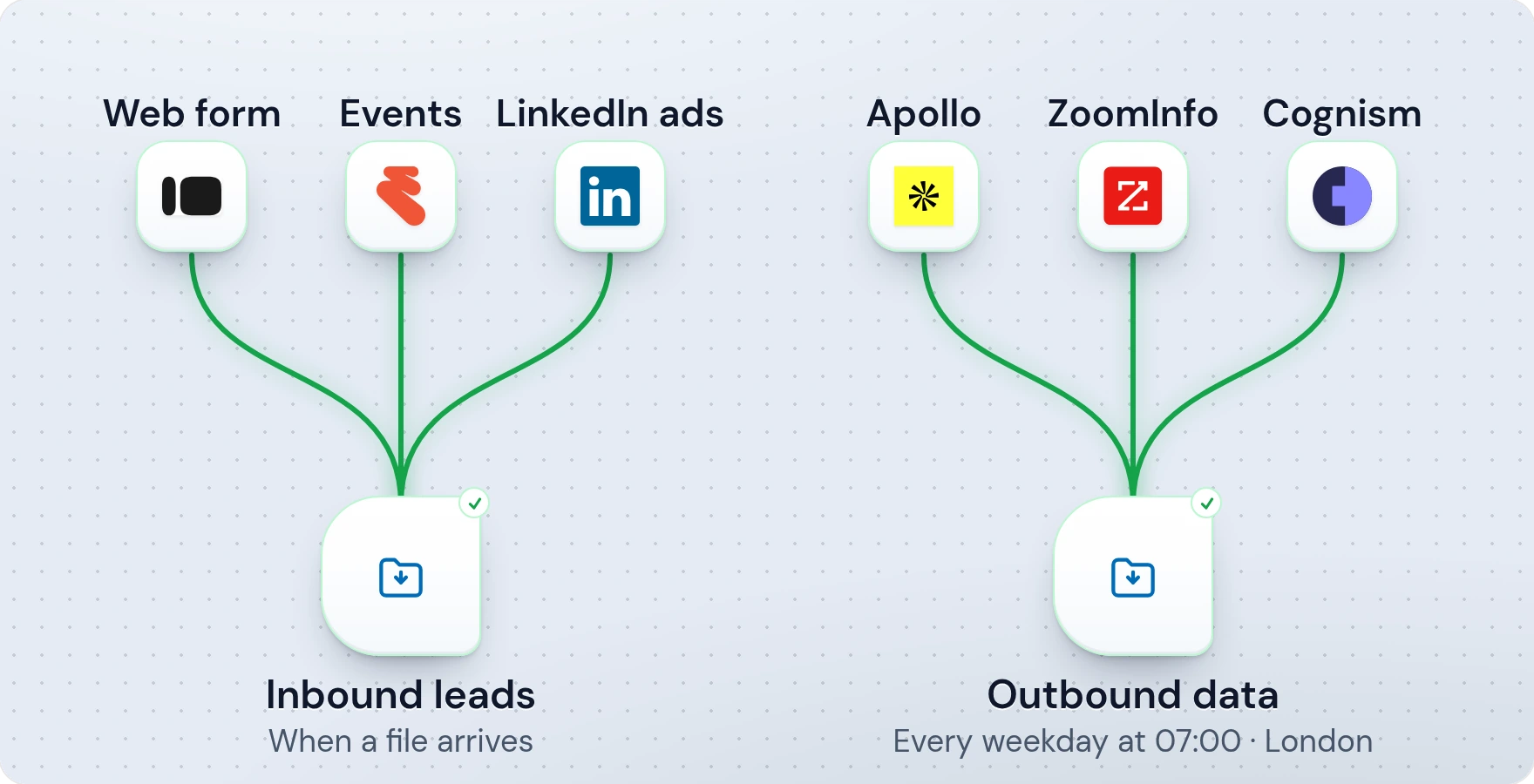
Choose how each file is cleaned
Start from a trail template or add the steps yourself: fix headers and spellings, keep only the people you sell to, remove duplicates and Do Not Contact rows, check company websites are still live and verify emails.
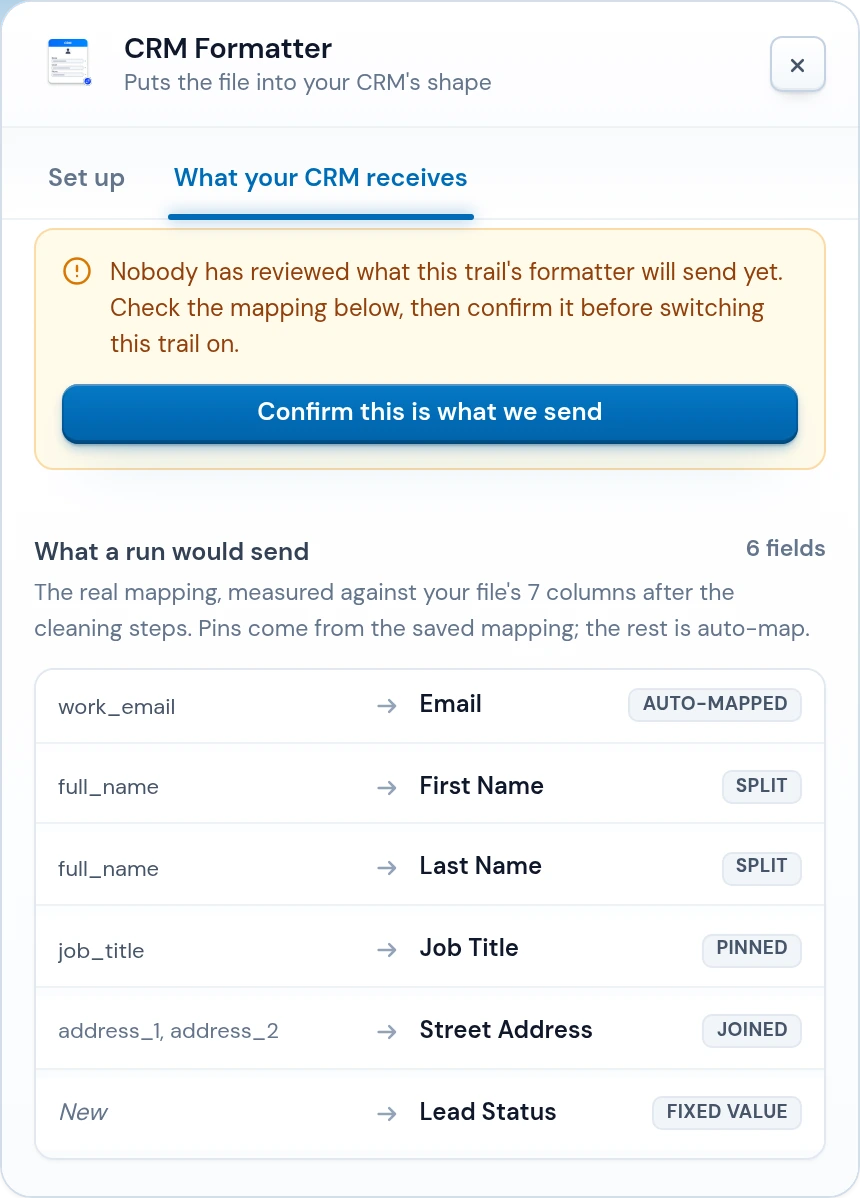
Match it to your CRM
Connect your CRM and your columns are matched to its fields, custom fields included. Check what will be sent, then confirm it.
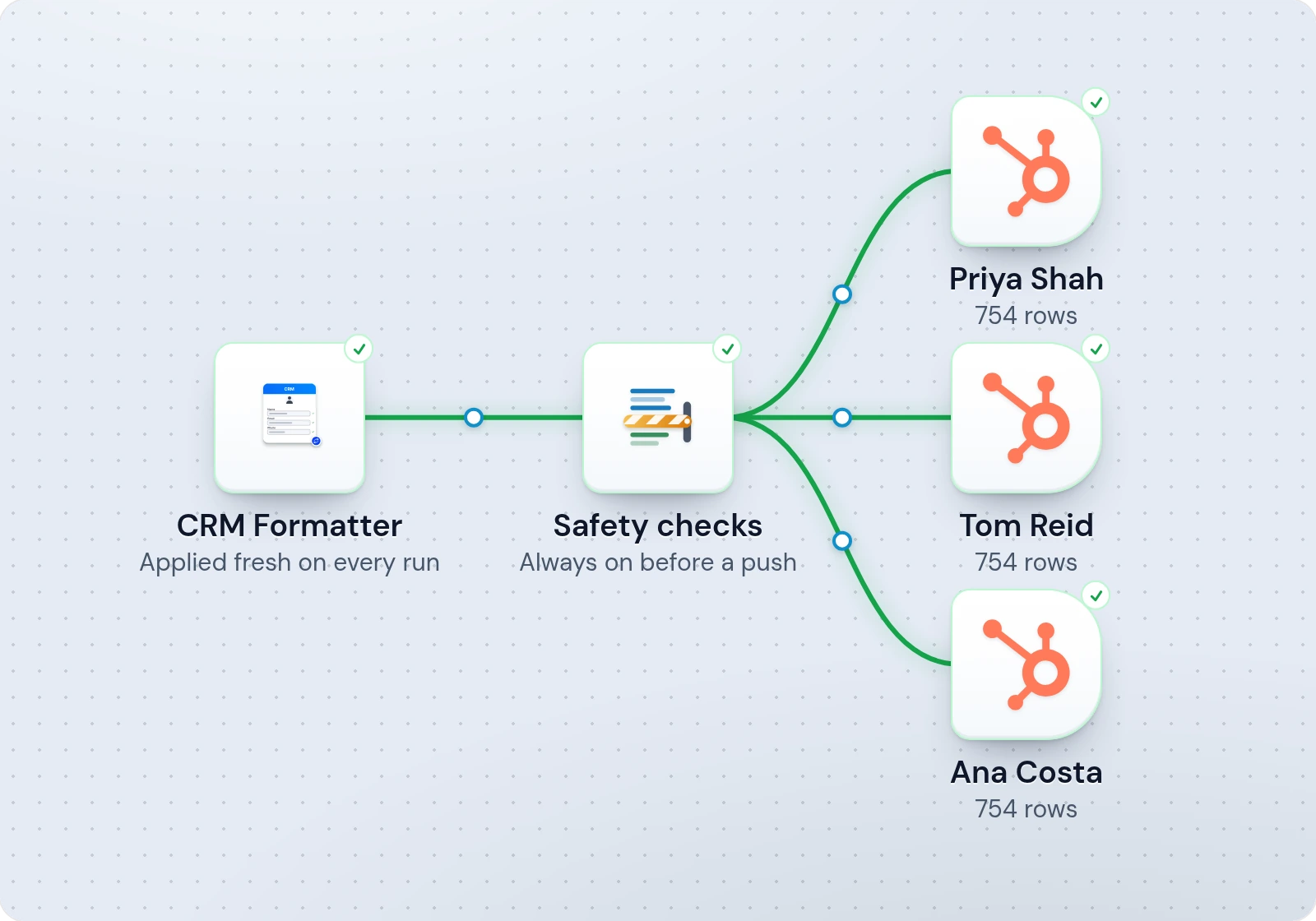
Choose who gets the leads
Give new leads to one person, share them out across the team or use the owner named in the file.
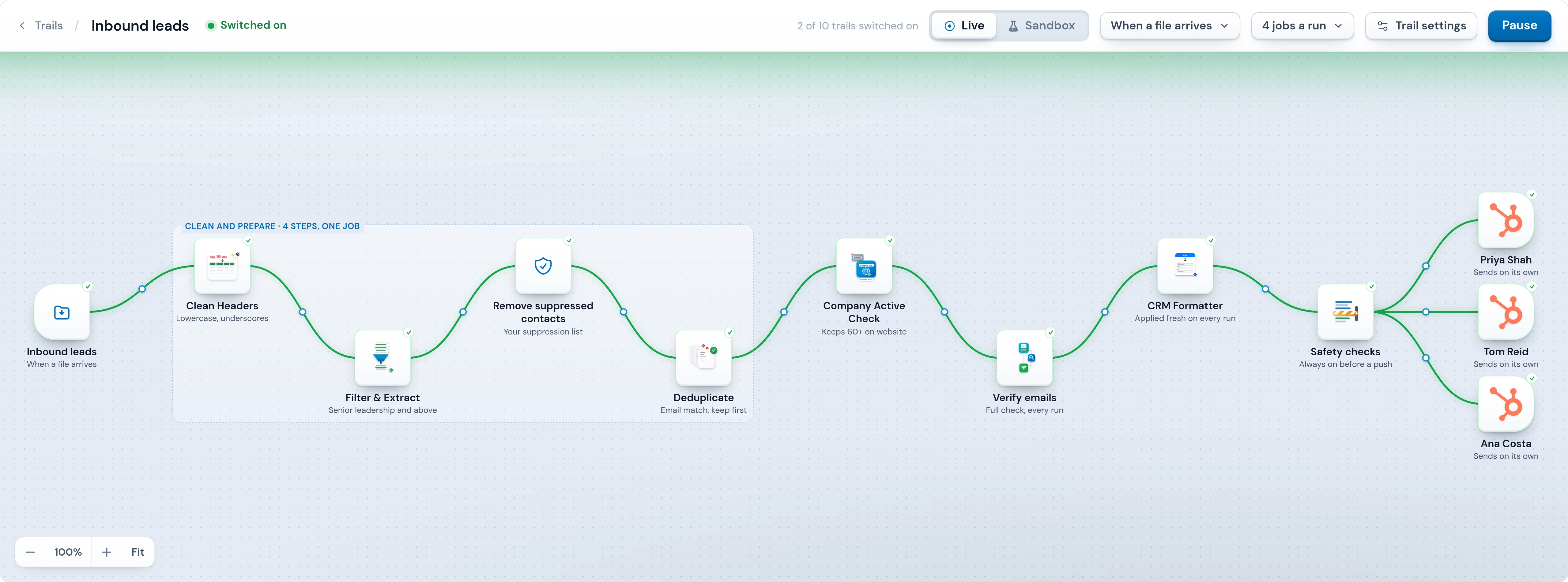
Test it, then switch it on
Run a real file through it in the sandbox, where nothing is sent. When it does what you want, put it live and every new file runs through the trail.

Bridgeant
Clean and transform with AI, securely
Describe the result you want. Bridgeant plans the steps, and Operelio's own tools do the work.
Add a file and say what you need
Upload one or more CSV or Excel files and describe the result you want, like ready for HubSpot, only decision-makers or no personal email addresses.

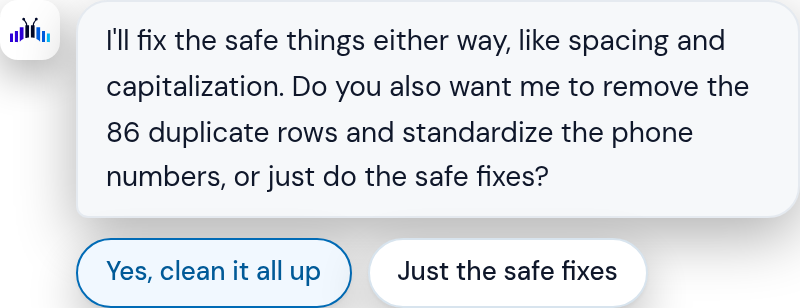
Answer its questions
If anything is unclear, Bridgeant asks before it plans. Pick an answer or type your own.
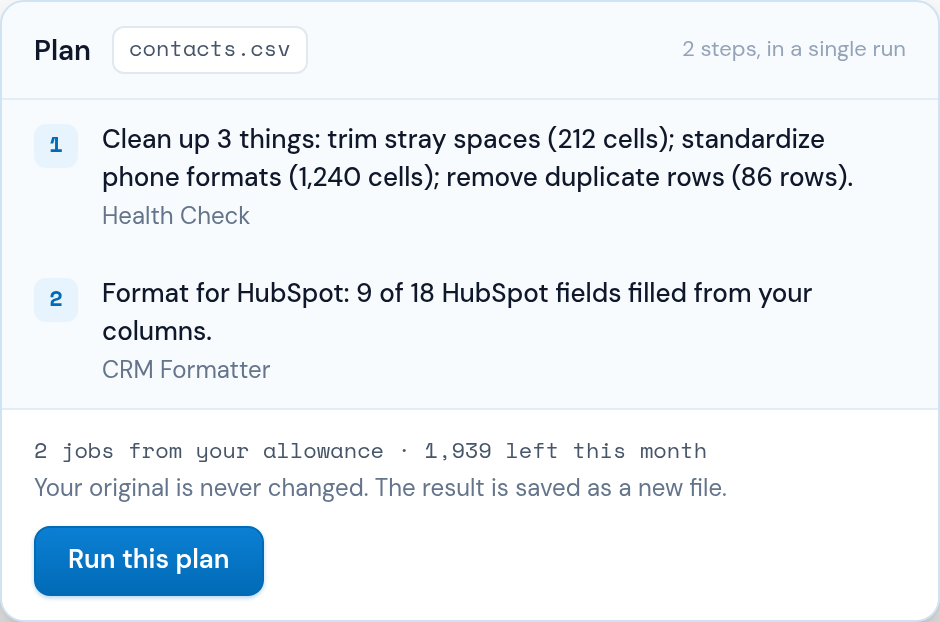
Approve the plan
Check the steps and what they cost, ask for any changes in the chat, then run it. Nothing runs until you say so.
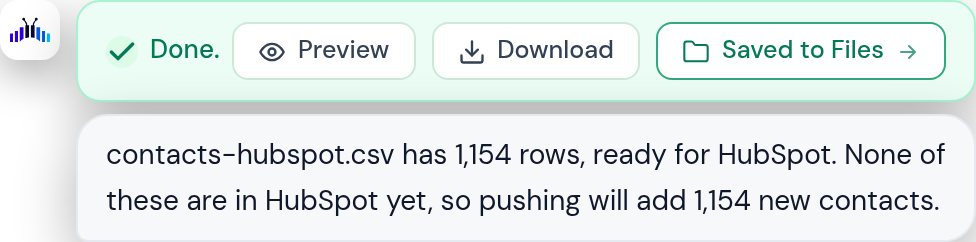
Use the clean file
It's saved as a new file, and the one you uploaded stays as it was. Download it, or open the run and push it to HubSpot, Salesforce or Pipedrive.
The toolkit
Fix one thing, fast
Operelio has 17 tools, each built for one job. Pick the one you need and run it yourself.
Pick a tool and add your file
Open the tool for the job, like Deduplicate, Merge Files or Split File, and upload a CSV or Excel file.
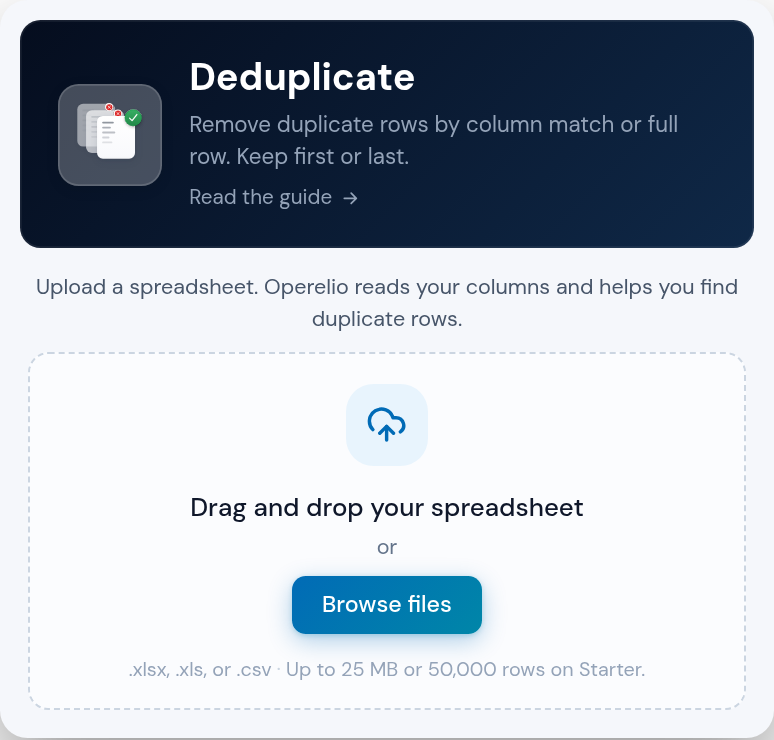
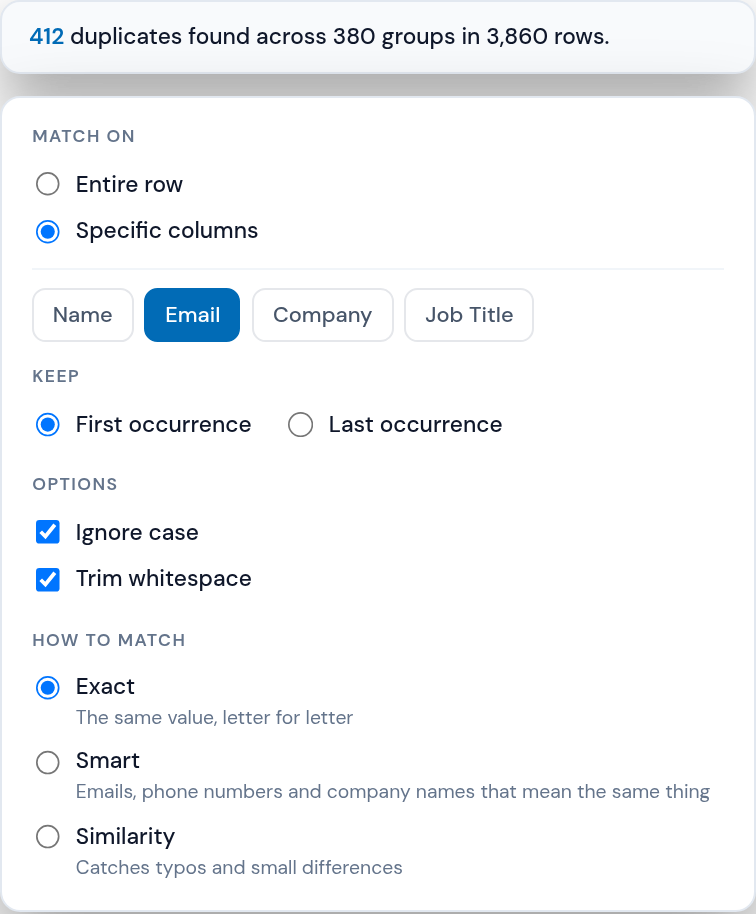
Set it up and check the numbers
Choose your settings and see the counts before anything runs. Previews don't use a job, so try as many settings as you like.
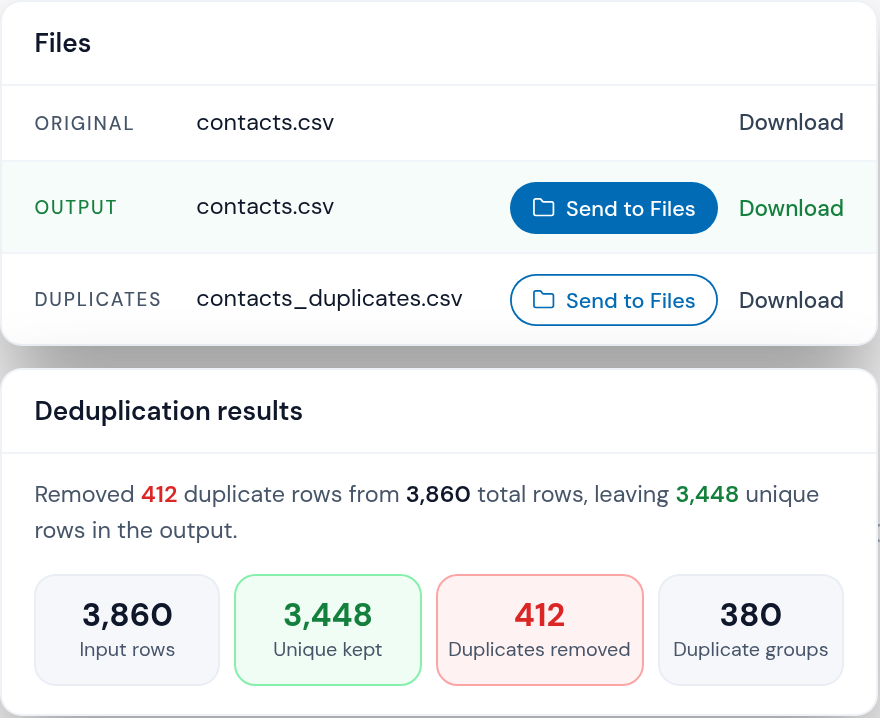
Run it and get a new file
Each run uses one job and gives you a new file with a summary of what changed. Download it, or send it to Files to use in another tool.
Do it again next time
Chain the tools you use in Workflow Builder, save the workflow and run it on the next file as one job.
CRM push
Replace the native importer
Send a finished file straight into HubSpot, Salesforce or Pipedrive, without downloading a CSV and running the CRM's own import.
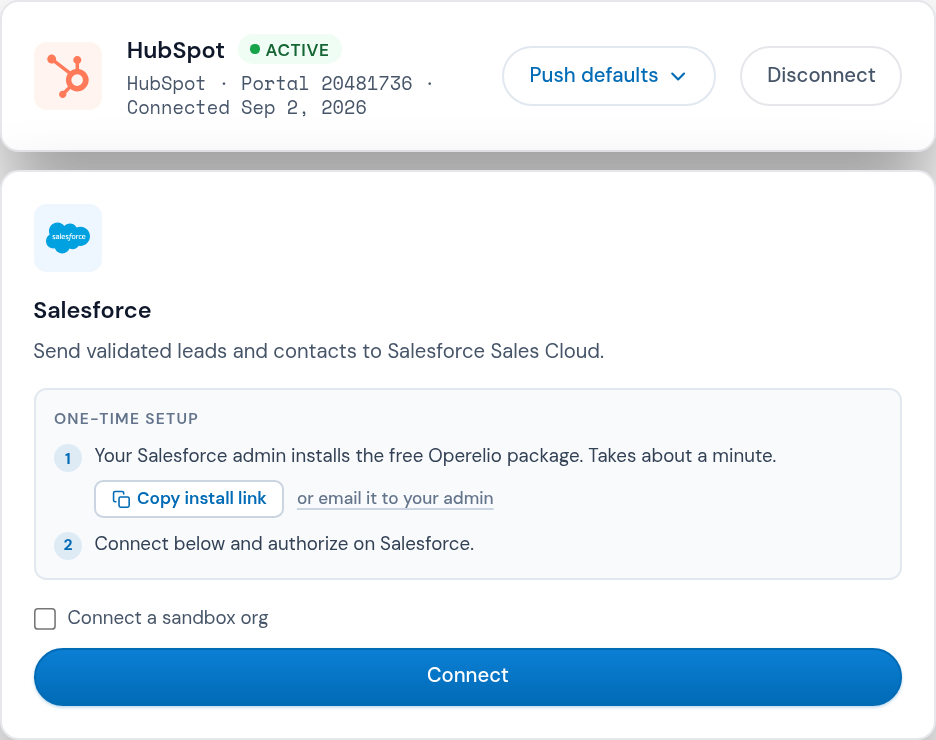
Connect your CRM
Sign in to HubSpot, Salesforce or Pipedrive once. From then on, finished files go straight into your CRM, with no import wizard to run.
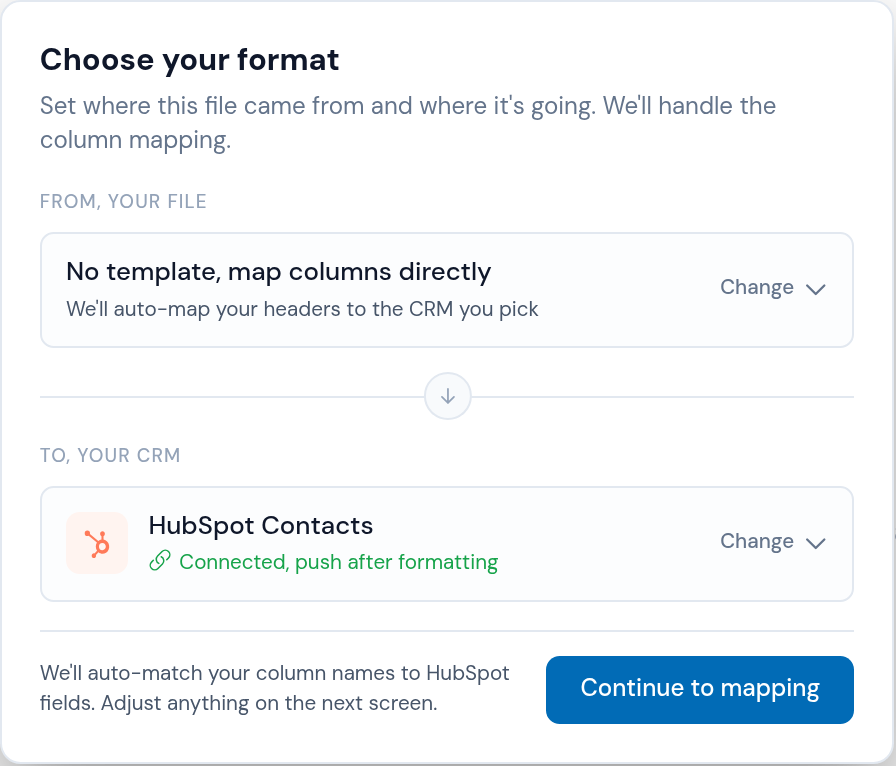
Match your columns once
Run your file through CRM Formatter. It reads your CRM's own fields, including custom fields, so your headers don't need renaming. Save the mapping and the next file lines up the same way.
See rejected rows before the push
Rows your CRM would refuse, like a missing required field or a value it won't accept, are listed with the reason before anything is sent, so you can fix them first instead of finding an error file afterwards.
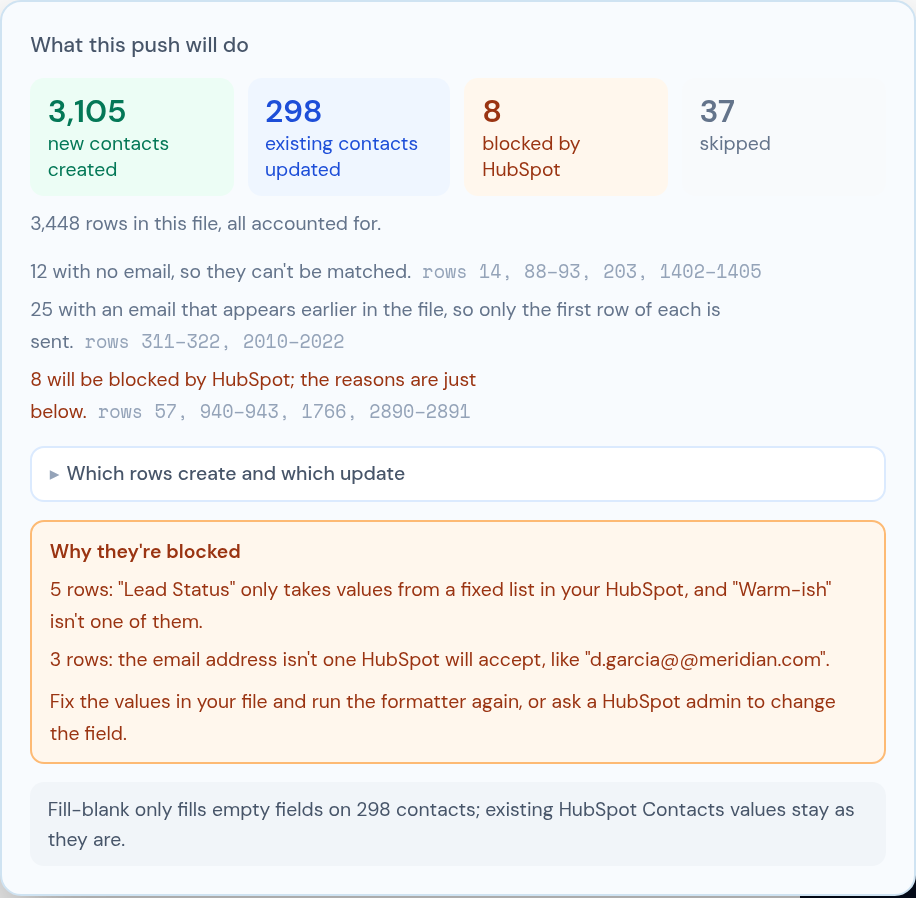
Update what's already there
Each row is checked against your CRM, by email for people and by domain or name for companies. If the record exists, it's updated instead of added again, and by default only its blank fields are filled.
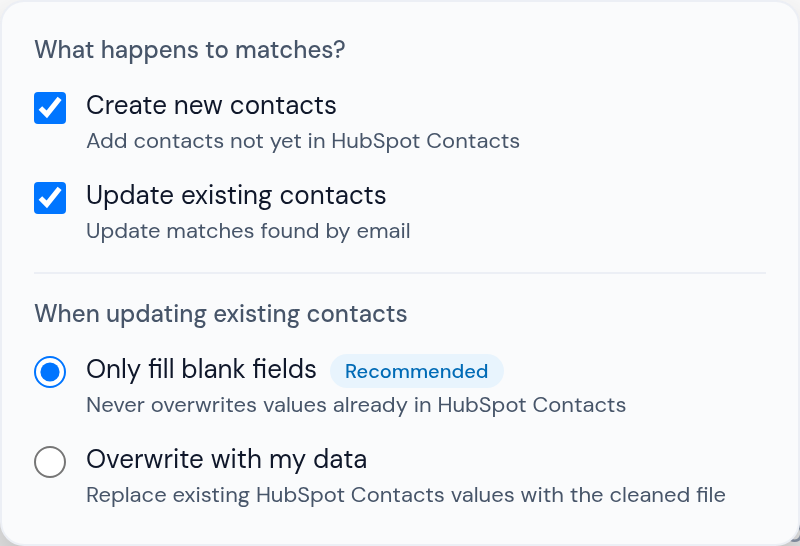
Push it, or let a trail do it
When the numbers look right, confirm and the records go in. For files that keep arriving, a trail does all of this for you.
In your CRM
Clean and in the right place
 HubSpotSalesforce
 Pipedrive
Your data
Three things Operelio never does with your file
It never reads your rows
The AI is sent a summary of your file: your column names, how full each column is, the row and column counts and the problems found. The values in your cells never leave your workspace.
It never guesses
Every change is made by a tool, not by the AI. Run the same file through the same steps and you get the same result.
It never overwrites your file
A run saves a new file and leaves the one you uploaded alone. From Starter, Files keeps every step, so you can open an earlier one and download it.
Common questions
Getting started
Which should I use: a trail, Bridgeant or a tool?+
Use a trail for a lead flow, where new files keep arriving from your sources. It cleans, verifies and checks each file against your CRM, then pushes the leads in. It can wait for you to approve, or run fully automated. Use Bridgeant for a one-off file, and it plans the job for you. Use a tool when you know the one job you need. Each works on its own.
Do I need a data audit before I automate lead imports?+
Not a formal one. For a team's lead flow, list your lead sources and run Health Check on a recent export from each. Bring in a consultant if you're auditing every data source across a large company.
See what Health Check looks forHow do I automate lead imports into my CRM?+
Set up a trail for each lead flow and send files to its folder by upload or email. The trail cleans them, verifies emails, maps columns to your CRM and gives each lead an owner. Test it in the sandbox, then switch it on.
Do I still need my CRM's import tool?+
Not for HubSpot, Salesforce or Pipedrive. Connect your CRM once and push from Operelio. You see how many records will be created, updated, skipped or blocked before you confirm. For other CRMs, you download a file ready for their import.
Can I start by hand and automate later?+
Yes. Use the tools on a few files first. When the steps are clear, build a trail. A column mapping you saved in CRM Formatter can be added to the trail.
Get started
Start with one file, or automate the whole flow.
Free to start, and no credit card needed.