
Automate, clean and verify
lead flow into your CRM.
Trails connects every lead source to HubSpot, Salesforce or Pipedrive. Cleaning, verification, validation, lead routing and the CRM import are all automated, with approval built in. Set up once. Runs on every file, every time.



A 5,000-row provider list lands. Dead companies and bounced emails never reach Salesforce, values you already hold are protected, and you approve the push.
What changes when a trail is running.
Automated CRM imports
A file lands, the trail runs, the leads are in HubSpot with an owner. No one has to open the export and do the import by hand.
Automated data cleaning
Every file goes through the same cleanup and validation before it gets anywhere near the CRM: duplicates out, Do Not Contact out, bad emails out, dead companies flagged. On every file, not just the ones someone had time for.
Automated lead routing
Set a trail up once and it does the imports from then on. Marketing drops the file, sales gets the leads already routed to the right rep, ops stops doing it by hand.
You stay in control
Nothing sends unless you allowed it. The checks run on every push, Bridgeant can hold one that breaks your rules, you get one email when a run needs you, and every run is on the record.
Nothing to code.
Live the same day.
No engineer, no automation consultant, no twenty-step workflow tool. Start from a template or a blank canvas, try it on a real file, put it live. The sandbox is free.
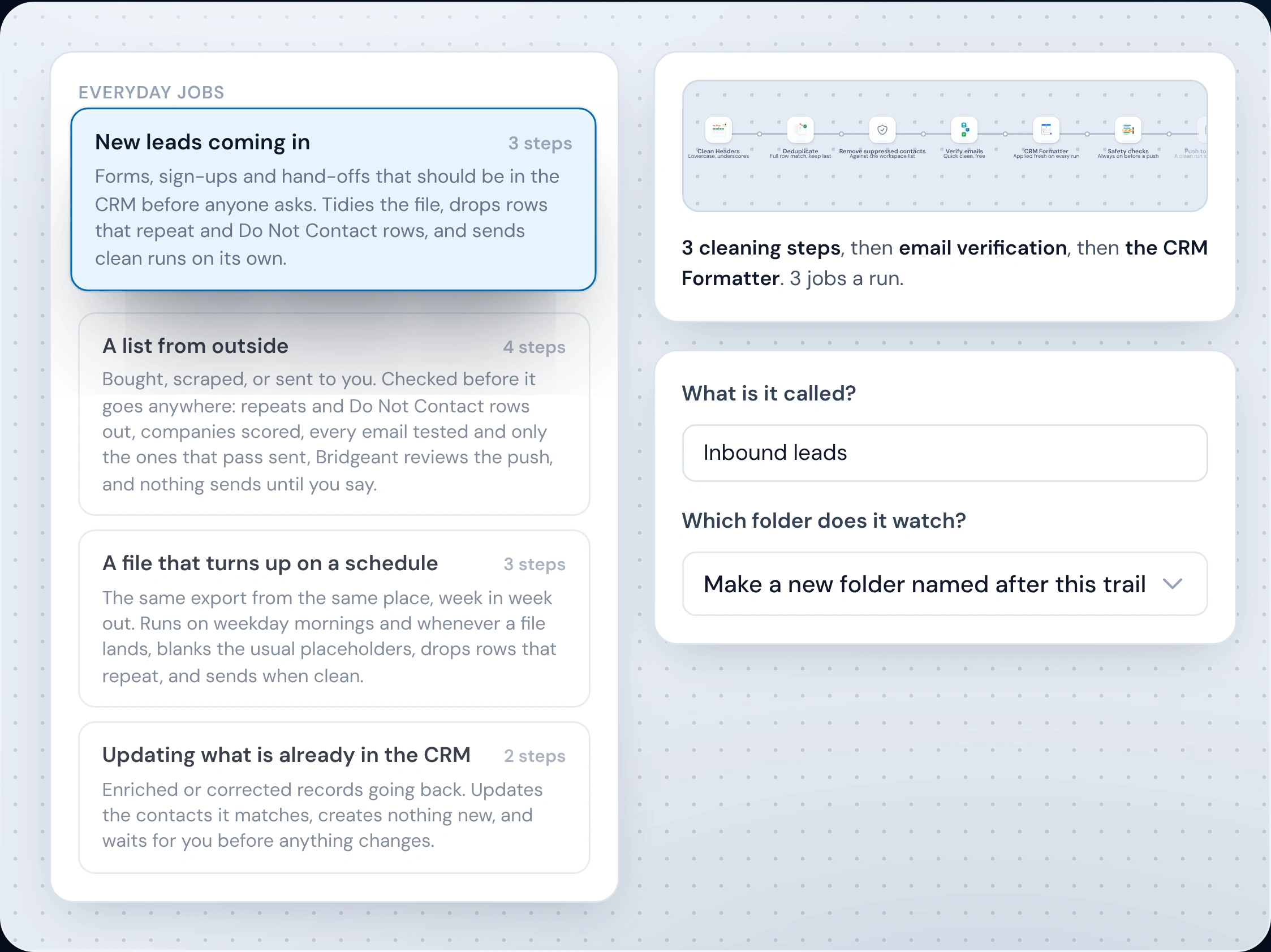
Pick where it starts
Three ways in: a template, a blank canvas, or a copy of a trail you already have. The templates cover the everyday jobs, new leads coming in, a list from outside, a file that turns up on a schedule, and come with the cleaning steps already in place, so you see the whole trail before you name it.
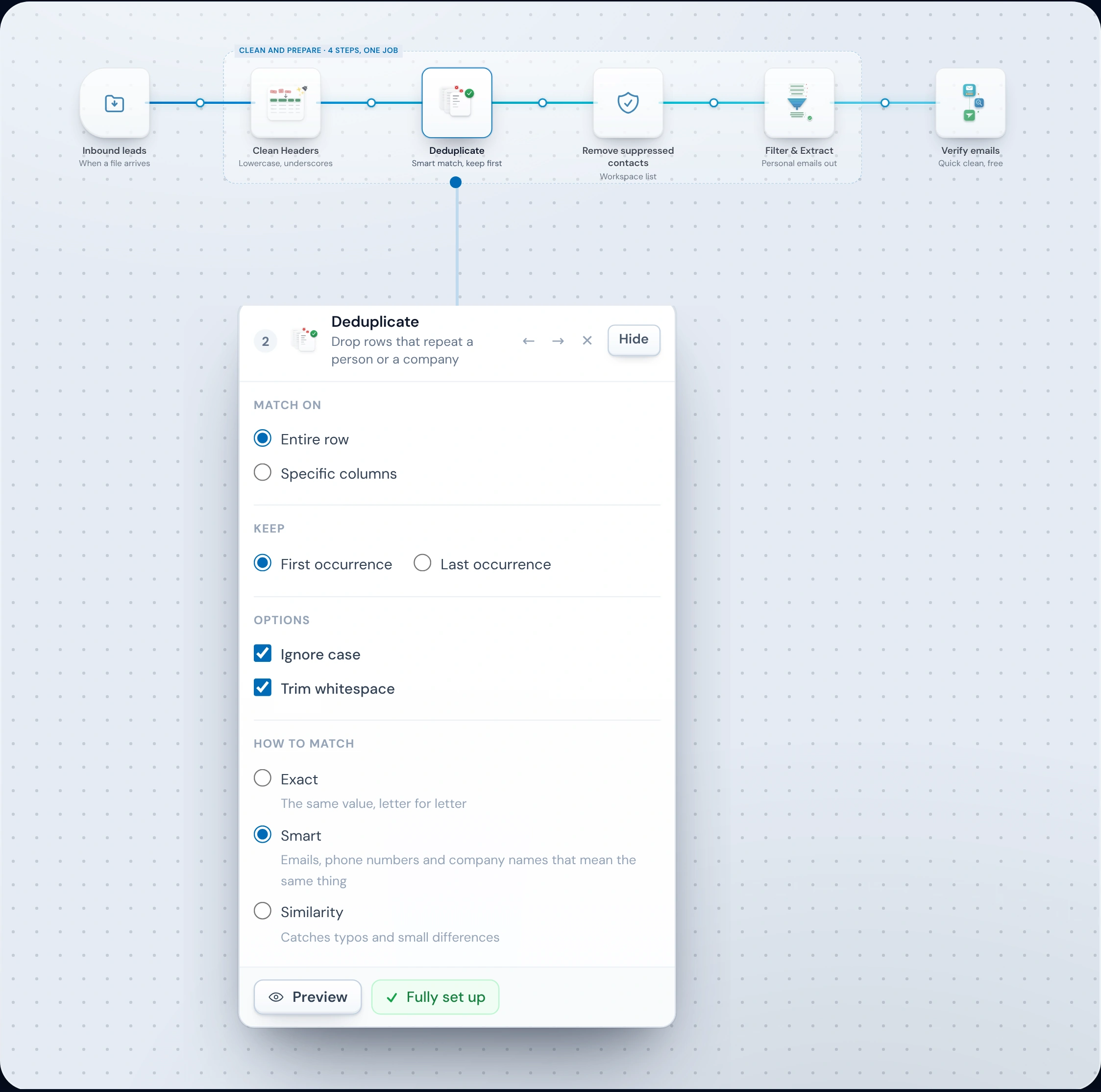
Build it out on the canvas
Each step is a tile. Add one, or click one that is already there, and its settings open underneath. Want a step without setting it up yourself? Pick a shortcut and it is built for you: remove personal email addresses, tidy up country names, add a seniority column from the job title.
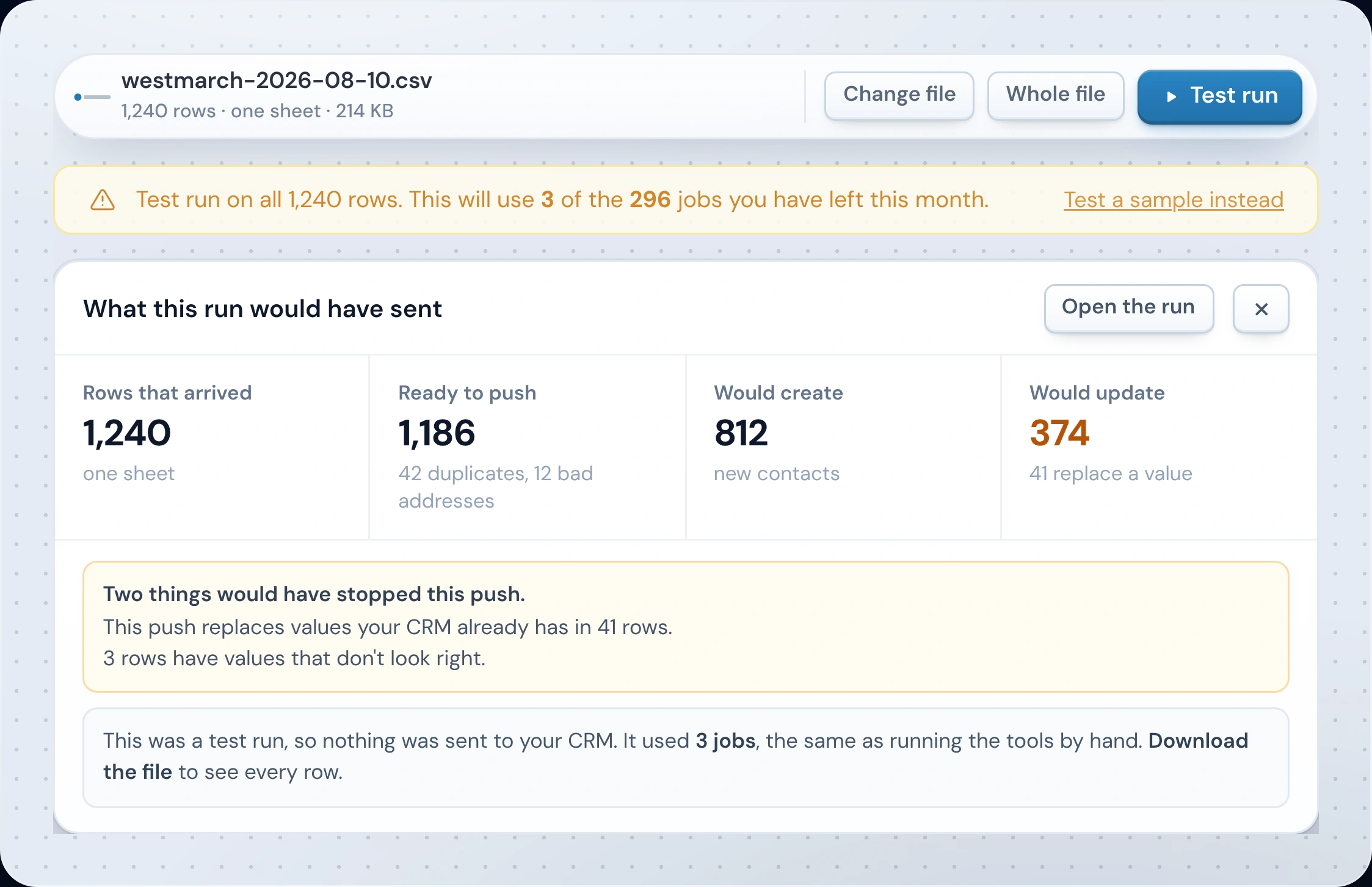
Test it on a real file
Upload one of your own files and run it. A dry run is free and shows what would happen. A test run does the real work and shows what it would have sent to your CRM: how many rows arrived, how many are ready, what would be created or updated, and anything that would have stopped it. Nothing is sent.
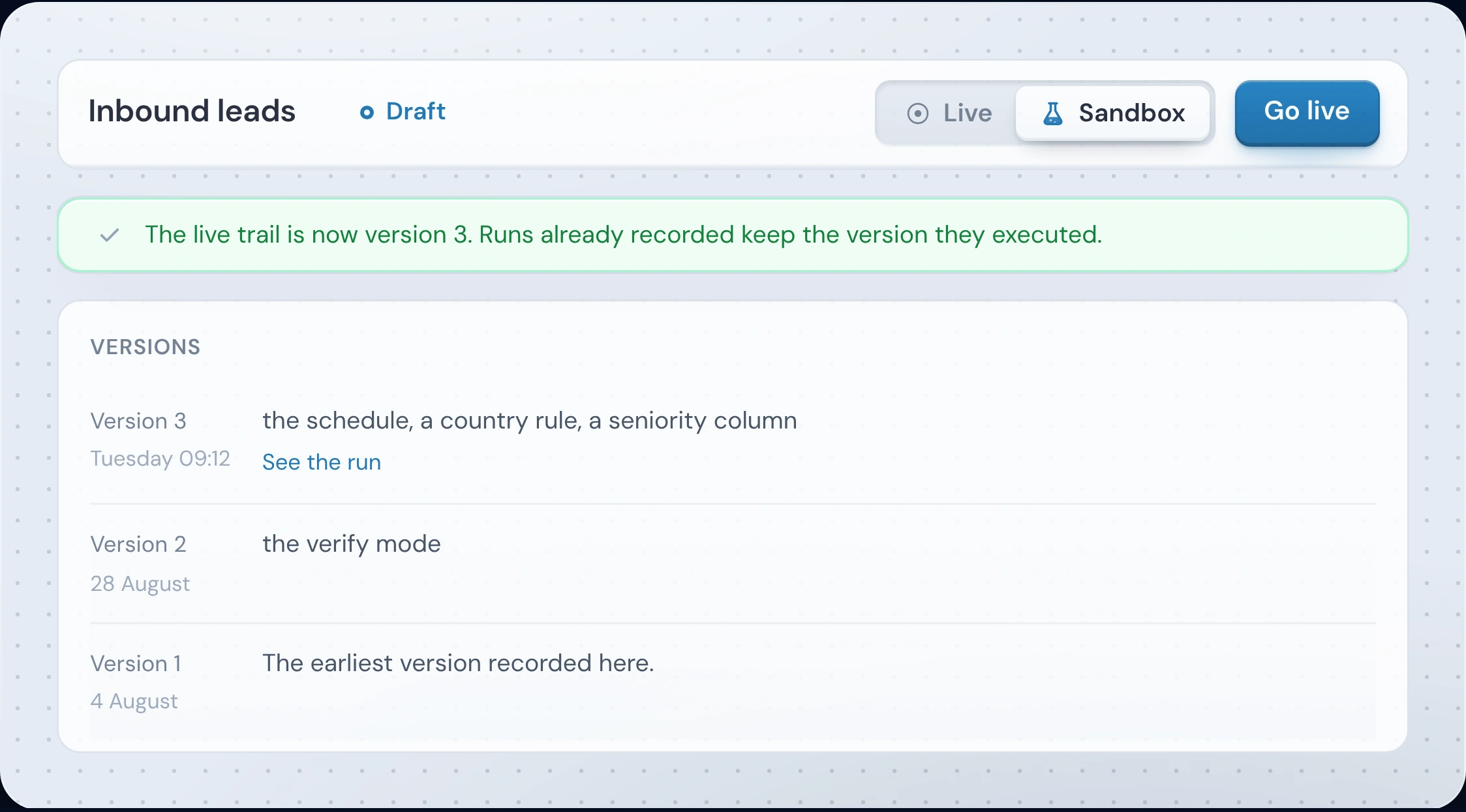
Put it live
Press Go live and the next file that lands is handled by the trail. Later changes are made in the sandbox and only reach the live trail when you put them live too, so a live trail never changes by accident. Every version is kept.
Everything a trail needs, built in.
Automated cleaning, email verification, validation, CRM matching, lead routing and approval are part of every trail. Nothing to add on, nothing to connect.
Bridgeant reviews every push
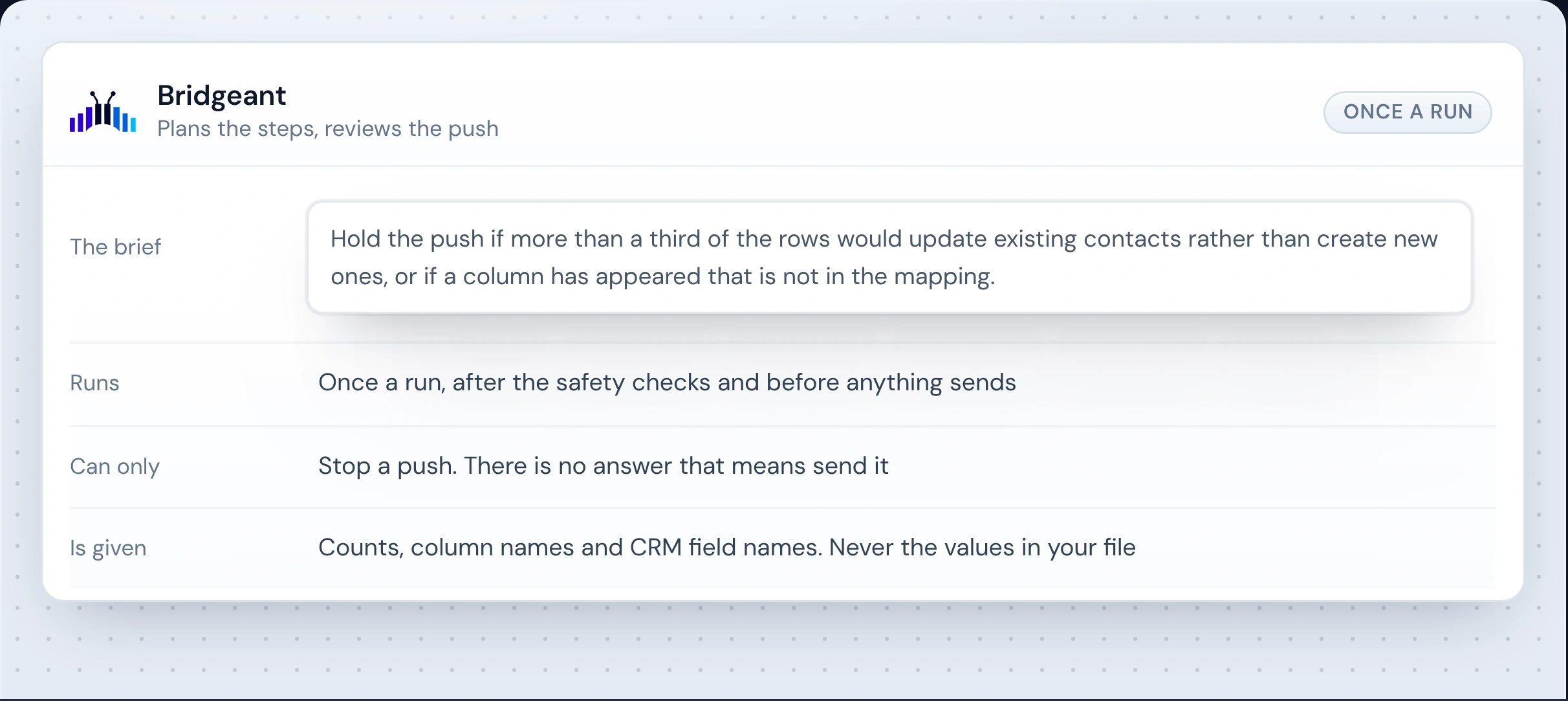
Write what should stop a push, the way you would tell a colleague. Bridgeant reads it once a run, after the checks, and can only hold the push. It is given counts, column names and CRM field names, never the values in your file.
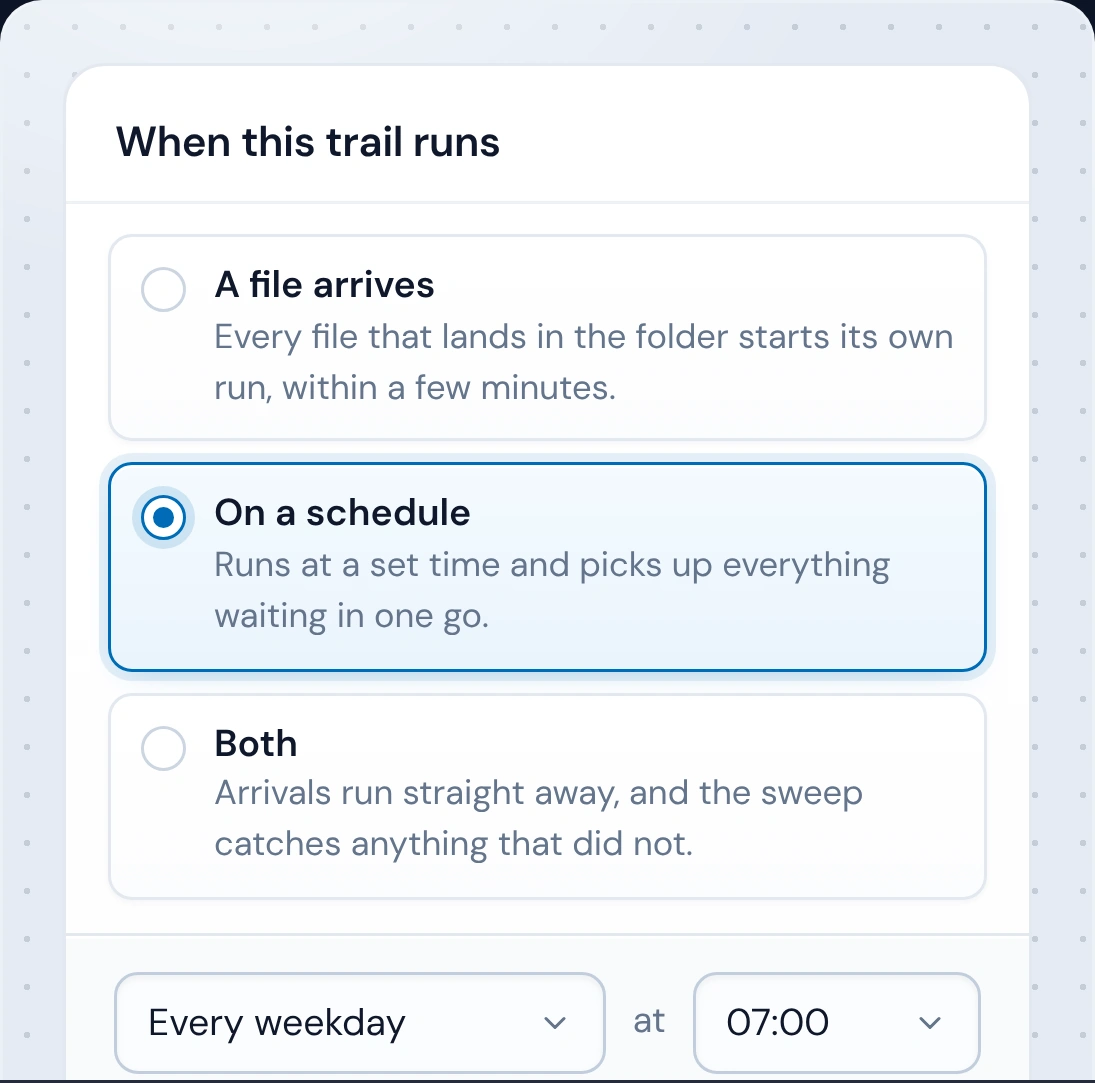
Runs when a file arrives, or on a schedule
Drop a file in the folder or email it to the folder's own address. Or set a time: every day, weekdays, weekly, or every 6, 8 or 12 hours.
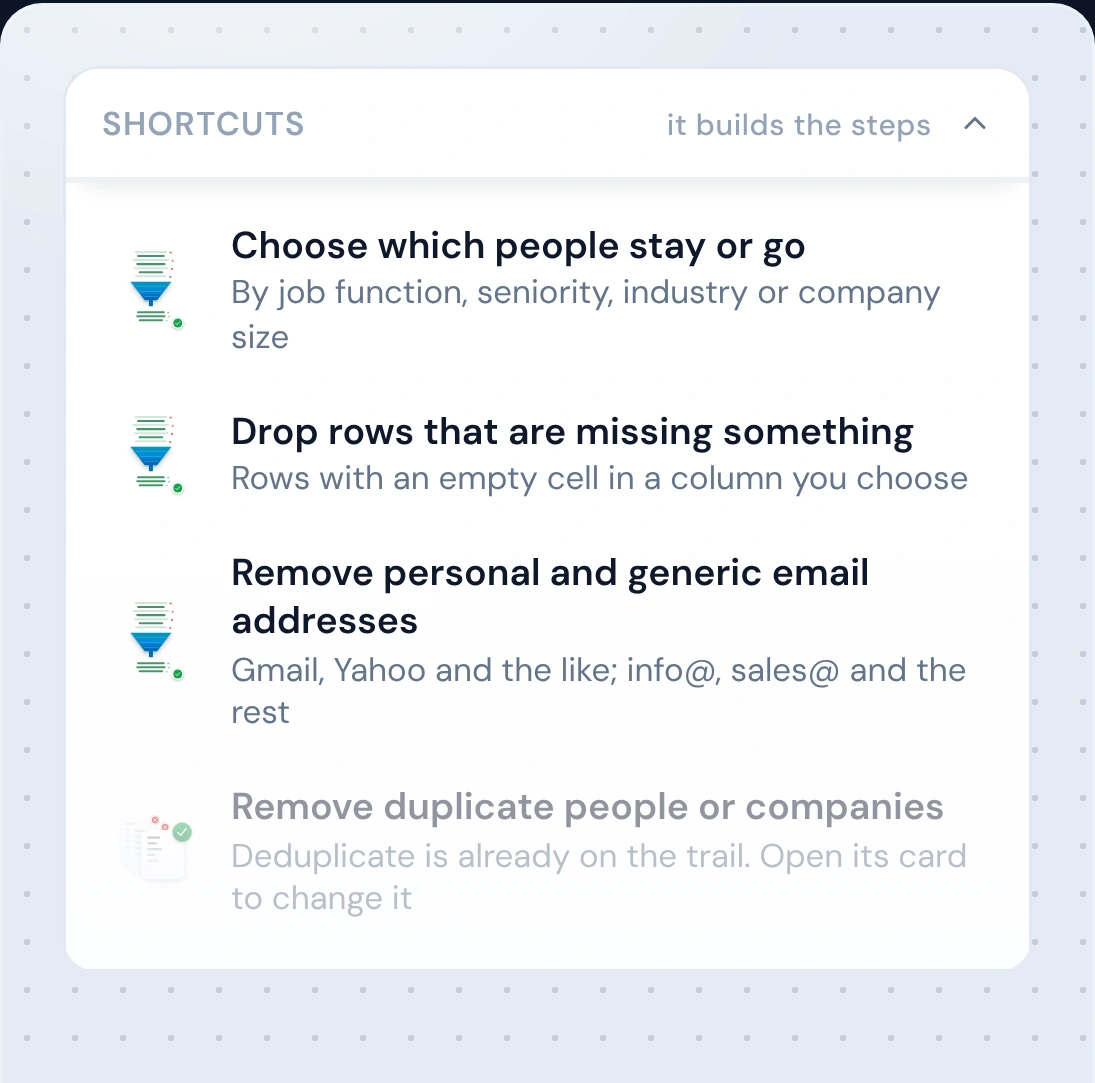
Shortcuts that build the cleaning steps
Pick what you want done and the step is built for you: remove duplicates, drop Do Not Contact rows, remove personal email addresses, tidy country names, strip Ltd and Inc from company names.
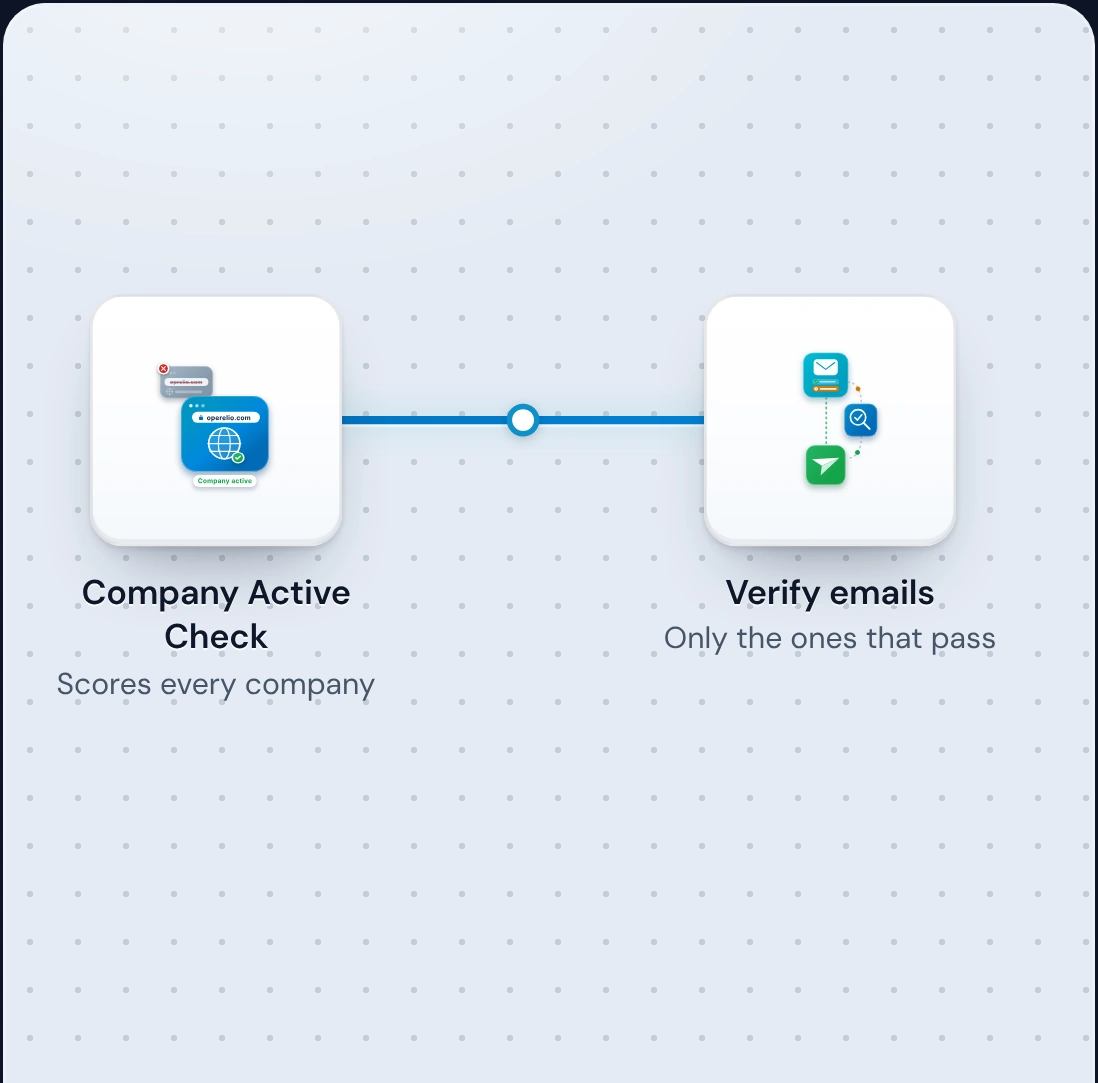
Every email checked, every company scored
Bad email addresses and companies that no longer trade are caught before the push. The rows that fail stay in the file for you to see, and are not sent.
Matched to your CRM's own fields
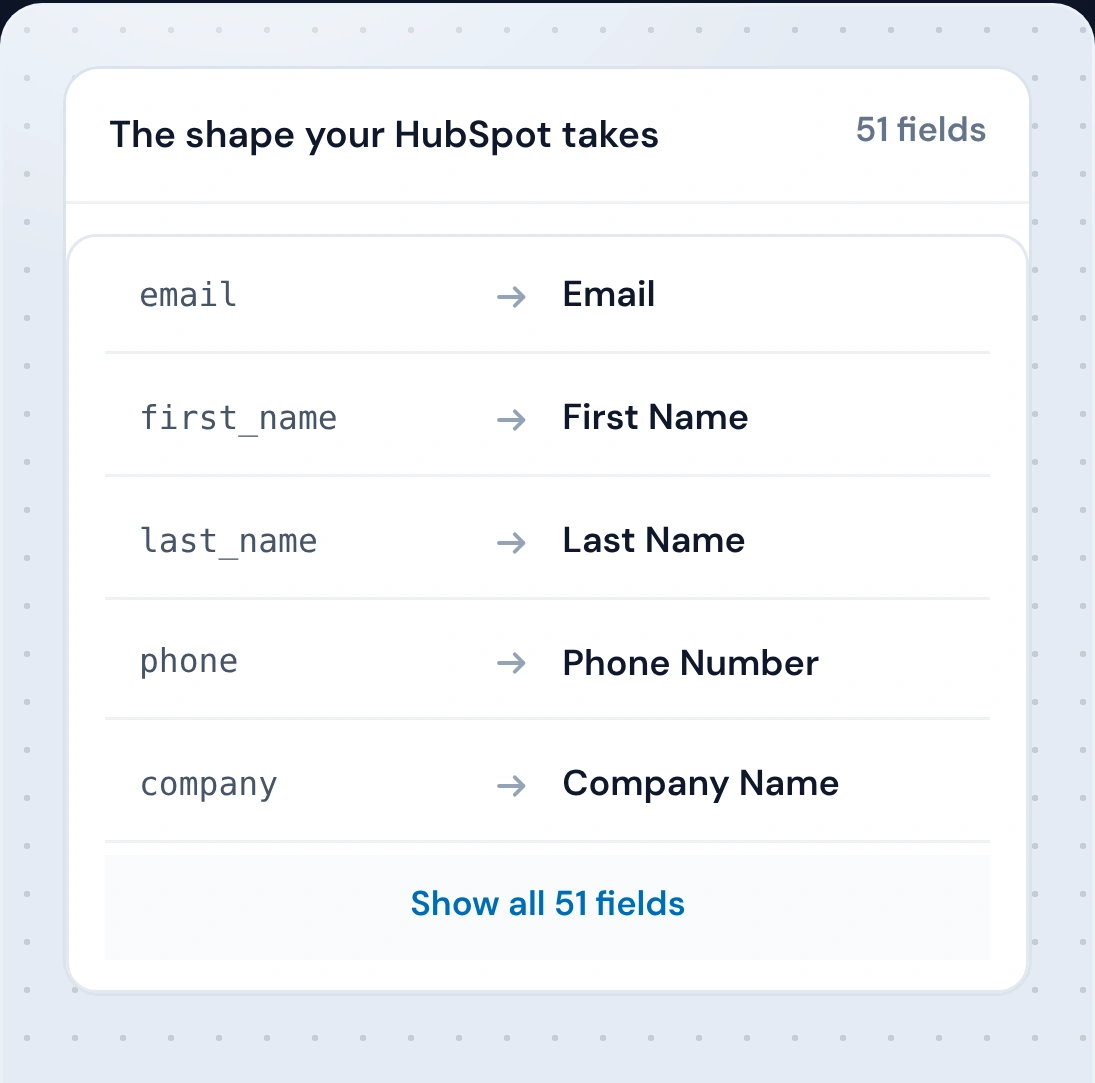
The CRM Formatter reads the fields your HubSpot, Salesforce or Pipedrive actually has, custom ones included, and matches the columns on every run. People or companies: HubSpot contacts and companies, Salesforce contacts, leads and accounts and Pipedrive people and organizations.
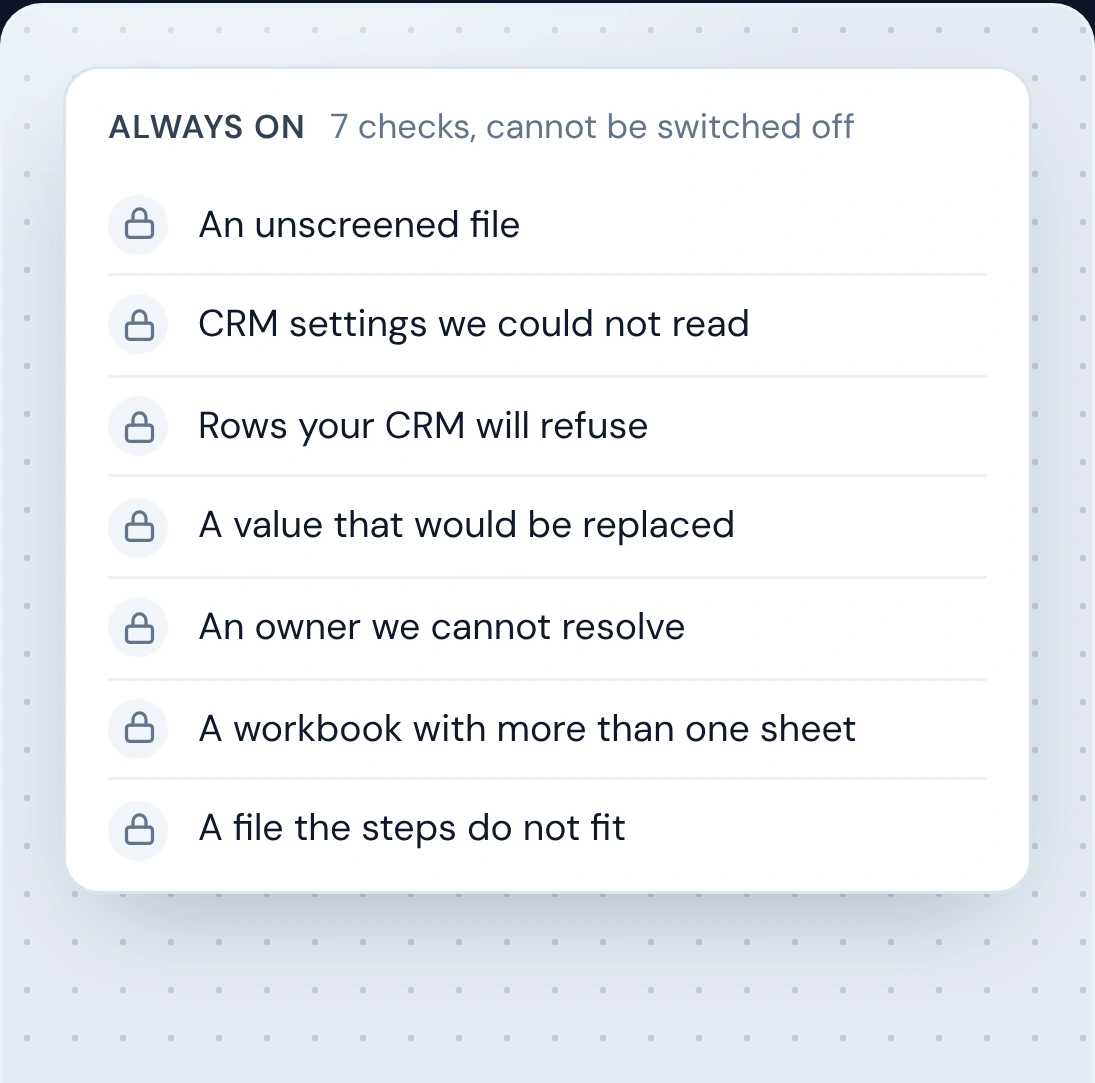
Seven checks that cannot be switched off
A file that was not screened, rows your CRM will refuse, a value that would be overwritten, an owner that cannot be found. Each one holds the push. Two more thresholds are yours to set.
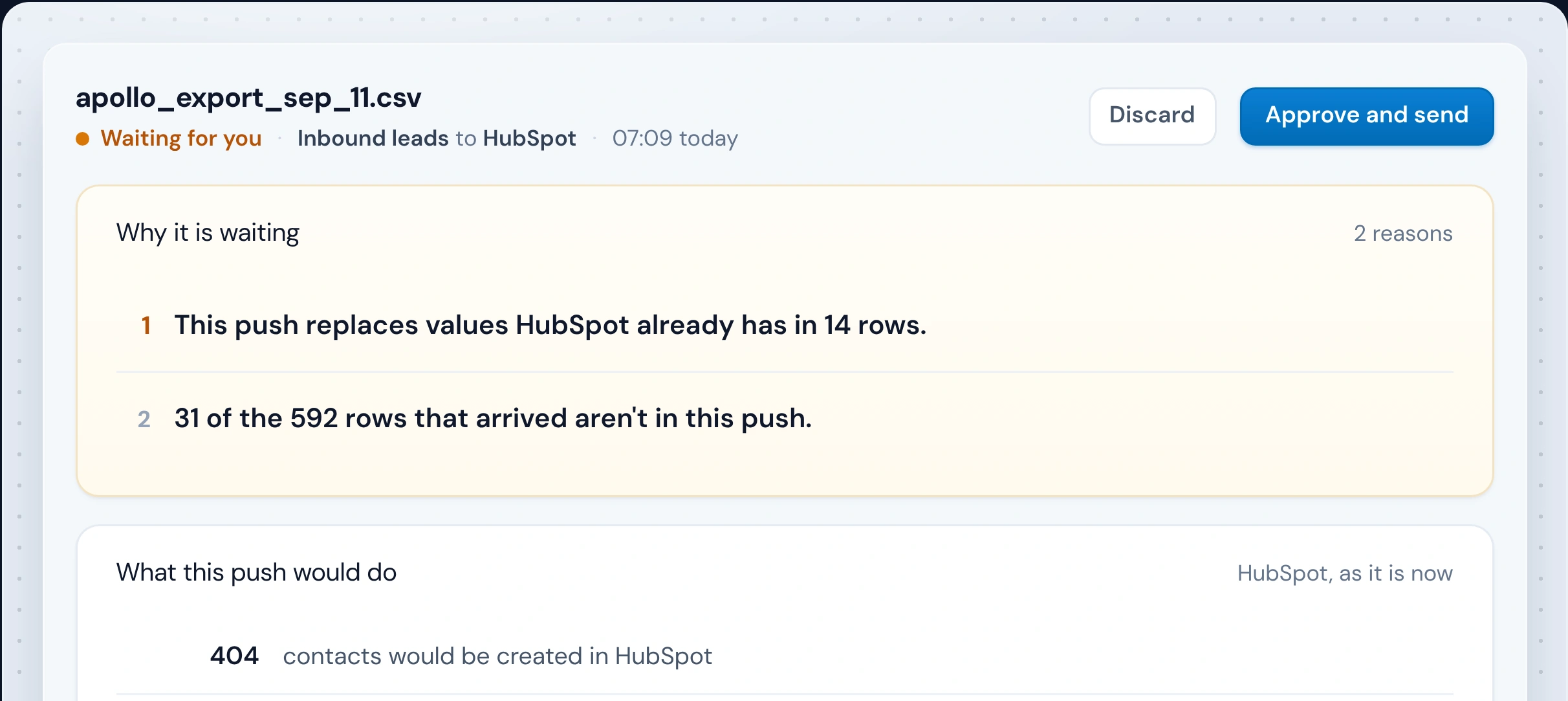
One click to approve, and a record of every run
When a run needs you, you get one email and a page that says why it is waiting. Approve it and the push is checked once more against your CRM as it is now. Every run and every version stays on the record.
Every lead lands with a person.
Say who the new contacts belong to and the push does the rest: one owner, round robin between the team, or whoever the file names. The owner is set on every record in your CRM, and nobody deals a list out by hand again. Automated lead routing and round-robin lead assignment are part of the push, not another tool.
Push to HubSpotWhere the finished rows go, and who they belong toA 538-row run, dealt in turn. 135, 135, 134, 134: the extra rows go to the top of the list, and the owner is set on every record in HubSpot.
Build one for free. Run them on Starter and up.
Free gets one trail in the sandbox, with test runs on your own file. On a paid plan a run uses the jobs, verify credits and Bridgeant messages the plan already has. The only limit is how many trails can be switched on at once.
Agency ceilings belong to each client workspace and are never pooled.
Trails, answered.
What is a trail?
Which CRMs can a trail push to?
How do files get into a trail?
Does anything reach my CRM without me?
How does it stop duplicates getting into the CRM?
Can I try it before I pay?
What does a run cost?
What happens when a run stops?
Does it work with a bought or scraped list?
What does Bridgeant see when it reviews a push?
What if the file is a workbook with several sheets?
What if my CRM changes while a run is waiting for me?
How is this different from a workflow tool like Zapier or Make?
Does a trail do automated lead routing?
Who can build or change a trail?
Simple to set up.
Safe to leave running.
Build the first trail in the sandbox, run a real file through it, and put it live when it does what you want.